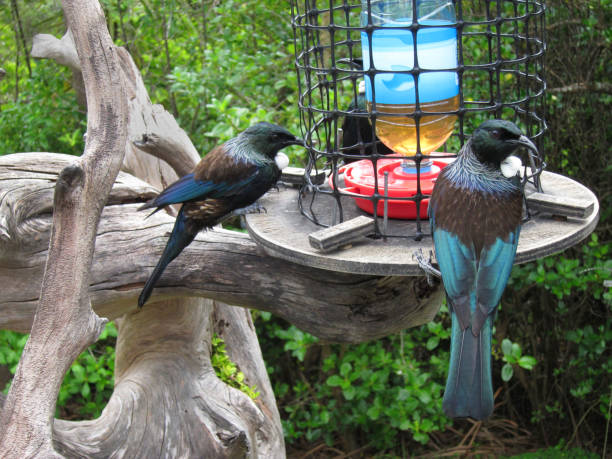
So, you’ve fallen in love with the tui. (Understandable.)
You’ve read about their superstar vocals, their romantic mischief, their diva-level territorial spats—and now you’re thinking: How do I get more of this drama in my own backyard?
Great news: turning your garden into a tui paradise is easier than you think, and the rewards? Daily concerts, close encounters, and the occasional mid-air chase scene right outside your window.
Here’s how to roll out the welcome mat for our feathered friends.
1. Plant the Good Stuff (Native is Best)
Tuis are nectar lovers at heart. If you want them to stick around, you’ll need to grow what they love to eat.
Here’s a starter list of tui-favourites:
- Kōwhai – A tui magnet when in bloom (those yellow flowers are basically nectar bars).
- Harakeke (New Zealand flax) – Especially in summer when it’s flowering. Watch for the upside-down acrobatics as tuis feed.
- Rewarewa – Offers great nectar and is also an impressive native tree.
- Pūriri – Provides both nectar and fruit (double whammy).
- Kaka beak (Ngutu kākā) – Stunning red flowers = tui candy.
- Fuchsia (Kōtukutuku) – They love the nectar, and the tree makes great nesting cover too.
Pro tip: Plant with a mix of species that flower at different times of year to keep the buffet open year-round.
2. Set Up a Sugar Water Feeder (But Do It Right)
Especially in winter when flowers are scarce, tuis appreciate a well-stocked sugar water station. But this isn’t a “pour in some Coke and hope for the best” situation.
Here’s the safe recipe:
- 1 part white sugar to 4 parts water
- Boil and cool the mixture before adding to the feeder.
- Clean the feeder regularly—like, every 2–3 days. Mold and bacteria = bad bird business.
Never use honey, brown sugar, or artificial sweeteners—they can harm the birds or ferment quickly.
Also, place the feeder near trees or shrubs so birds have a quick escape route if needed (no one likes eating in the middle of a wide-open space with predators around).
3. Create a Bird-Safe Space
Tuis might be bold, but they’re not reckless. A few safety measures will make your garden much more inviting:
- Keep cats indoors, especially during nesting season (spring to summer). Nesting tui are easy prey.
- Avoid using chemical sprays—especially near flowering plants or feeders.
- Provide cover: Dense shrubs, trees, or even hedges offer shelter and nesting spots.
And remember—less lawn, more layers. A wild-ish garden is a happy tui garden.
4. Think Vertical
Tuis love height. They perch up high to scope out their kingdom and deliver those glorious solos.
Tall trees = good. Multi-level canopy planting = even better.
If you’ve got space for a few larger native trees—like pōhutukawa, rimu, or even tawa—you’ll not only attract tuis but give them real estate worth singing about.
5. Be Patient (but Watch Closely)
It might take a season or two for the plants to establish and the word to get out—but once the tuis know your garden is the hot spot, you’ll have regular visitors.
And trust me, once you’ve watched a tui hover mid-air to sip from a kōwhai bloom, or belt out a full vocal solo while fluffing its feathers in the sun—you’ll know it was worth the wait.
Bonus Tip: Log Your Visitors
Grab a notebook or use an app like iNaturalist NZ to track tui sightings, behaviours, and visits. It’s a great way to notice patterns—like when they start nesting, or what flowers they prefer each season.
Plus, it’s fun to name the regulars. (“Noisy Geoff” and “Madam Squeaks” have quite the following in some gardens.)
Final Word: Your Garden Can Make a Difference
By creating a tui-friendly space, you’re not just adding some wild entertainment to your mornings—you’re actively helping restore native bird populations and bringing a piece of Aotearoa’s natural magic closer to home.
And that’s something worth singing about.
Want more garden inspiration? Next week’s post will explore native plants that attract more than just tuis—think bellbirds, kererū, and piwakawaka too. Stay tuned!