If you thought tuis were just pretty birds with great pipes, think again.
Behind those shimmering feathers and angelic arias lies a creature with more personality quirks than a reality TV contestant. From territorial tantrums to flirty serenades, tui life is anything but boring.
Let’s peel back the curtain on the social (and slightly dramatic) lives of these native New Zealand icons.
That Song? It’s Not Just for Show…
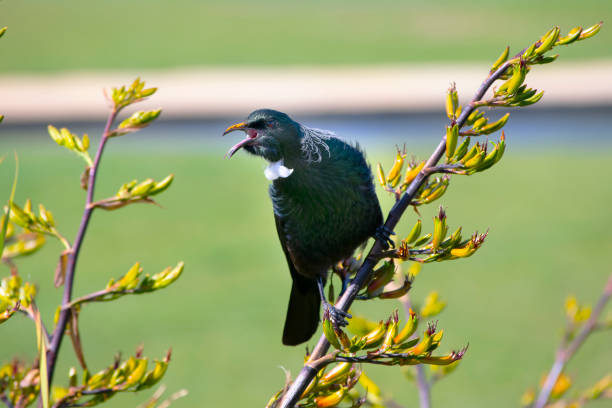
Yes, tuis sing beautifully—but there’s more to it than just flexing their vocal cords.
Male tuis use their complex calls to attract mates, and believe me, they pull out all the stops. The more varied, crisp, and inventive the song, the more impressive it is to a potential partner. (Apparently, “weird robot noises + birdbeatboxing” is the ultimate turn-on in the tui world.)
Even cooler? Each tui has a slightly different dialect, depending on the region they’re from. So a tui from Auckland might sound totally different from one in Dunedin—kind of like the bird version of accents.
Imagine going on holiday and not understanding the local tui “lingo.” Awkward.
Tui Romance: Messy, Loud, and Short-Lived
Tuis aren’t exactly romantic in the long-term sense.
They’re mostly monogamous for a season, but that doesn’t mean they’re always faithful. There’s been plenty of sneaky side-flirting spotted by researchers—and more than a few cases of tuis chasing away rivals with all the subtlety of a soap opera breakup.
The males stake out the best feeding spots and sing their hearts out to lure in females. Once the lady tui is impressed (or maybe just tired of hearing the same chorus), she’ll choose her mate and head off to nest—on her own.
That’s right: mum does all the work. Nest building, egg-sitting, chick-feeding—she’s a one-bird parenting powerhouse, while the male tui… well, he’s probably off singing to someone else by now.
Classic.
Nesting 101: Home is Where the Flax Is
Female tuis build their nests in dense shrubs or trees, often in the fork of branches, carefully weaving twigs, grass, moss, and feathers into a tidy little home.
They lay 2–4 eggs, and the chicks hatch after about two weeks. Another couple of weeks later, they fledge (fly the nest), but mum still feeds them for a while after that—imagine a bunch of awkward teenage tuis hanging around the garden begging for snacks.
If you see young tuis being a bit wobbly in the trees and constantly cheeping, chances are you’re witnessing the bird version of teenagers demanding Uber Eats.
Can Tuis Be Tamed? (Short Answer: No)
Despite their city smarts and bold personalities, tuis are still wild at heart. They might come close to feeders or check you out from a low branch, but don’t expect one to sit on your shoulder and sing you sweet nothings.
They’re curious, not cuddly.
That said, some tuis become “regulars” in neighbourhood gardens, especially if they’ve found a reliable sugar-water buffet or some juicy kōwhai blooms. You might even get to recognise individual tuis by their calls or quirks—one tui in Auckland became famous for mimicking the local bus announcements.
Imagine that: a bird telling you it’s the next stop on the 274 to New Lynn.
Final Thoughts: More Than Just a Pretty Voice
Tuis are clever, cheeky, territorial, and endlessly entertaining. They bring a special kind of energy to the New Zealand landscape—part singer-songwriter, part diva, part street performer.
So the next time you hear a tui warbling from the treetops, take a moment to appreciate everything behind that call: the flirtation, the rivalry, the parenting hustle, and yes, the drama.
Because in the world of tuis, there’s always more going on than meets the eye—or ear.
Coming next: Want to create a tui-friendly backyard haven? Stay tuned for our ultimate guide to native planting for birds (no green thumb required!).